Articles

Affichage des articles associés au libellé China-Africa

China’s engagement in Africa : The need to engage with Africa Civil society

Image
  There is no better time than the eve of a China-Africa summit, FOCAC, to question the nature of China’s engagement with Africa.  Held this year at the ministerial level, the FOCAC opens on Monday, November 29th in Dakar and will be like all other bilateral summits with Africa, a politically centered summit where the civil society had no role in shaping its agenda. With the noticeable exception made this year with the France- Afrique summit which turned out to be a "dialogue" between French president Emmanuel Macron and some African youth representatives, the African civil society has never been associated to these discussions.    China’s engagement on the continent is strictly circumscribed by political correctness, where only government-approved actors (public or private) are legitimate partners. Civil society and political oppositions are not in the picture. Of course, this approach is in total alignment with China’s non-interference policy in other countri...
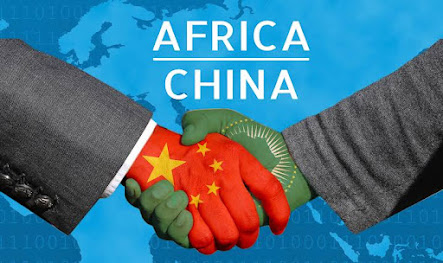
China in Africa, an alternative narrative

Image
Recently,   China's investments, especially the model "Mining for Infrastructure" contracts  in  Afric a  have been under scrutiny in Ghana and the Democratic Republic of Congo, where their efficiency is called into question. Do African  resource- rich  countries  really benefit from th ese contracts ? From Angola, where it was first implemented in Africa (the Angola model), to Ghana, the Democratic Republic of Congo, and Guinea, this model has often been criticized not only by donors but also by civil society  for the various risks it imposes on recipient countries: debt burden, environment endangerment, lack of transparency, and corruption.   Unfortunately, the “Predatory China” narrative dominates and shapes the framework under which Chinese investments, big or small, are scrutinized. A dangerous and simplistic narrative that tends to oversimplify not only the international context but also the motivations that drive both African countries...